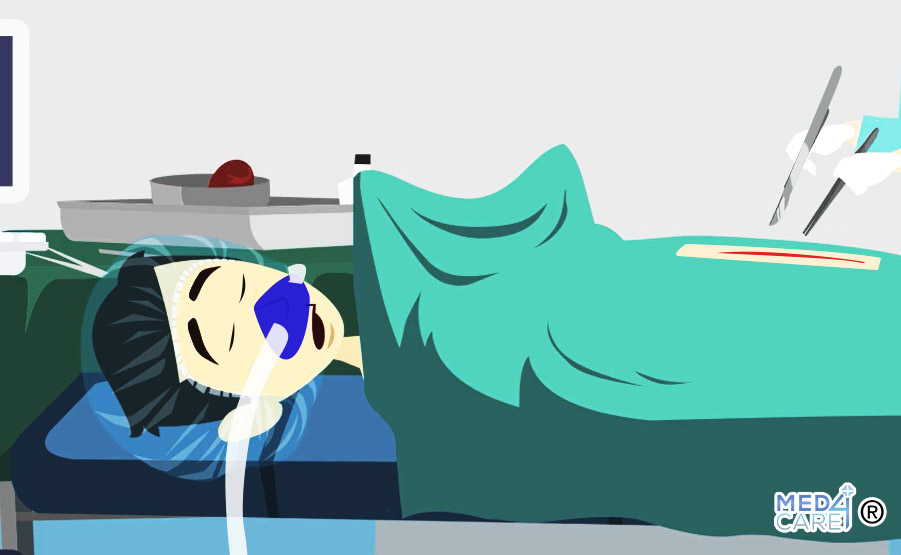
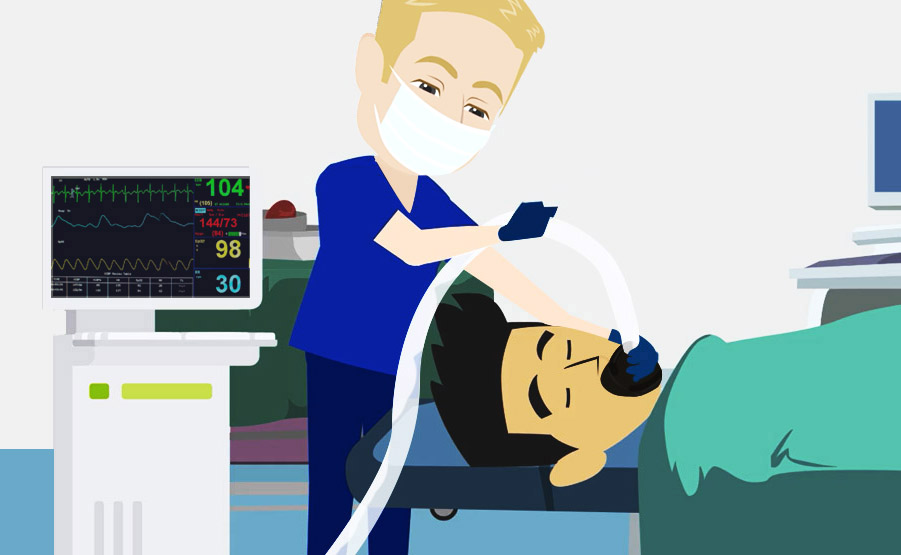
General anesthesia puts you to sleep for surgery. Learn how it works, its phases, the drugs used, how to prepare and the possible complications and risks.
General anesthesia: how does it work?
General anesthesia is an anesthetic procedure. It consists of putting the patient to sleep and in a condition to withstand surgery without significant consequences. Let's look in more detail at what it is and how it works.
What exactly happens during general anesthesia?
The condition of the person under general anesthesia
A person undergoing general anesthesia is in a state of unconsciousness, paralyzed and without feeling pain. During anesthesia the person is unable to breathe on their own, their reflexes are abolished, and the heart and circulatory system are depressed.
Vital functions are abolished during general anesthesia: the anesthesiologist continuously "resuscitates" the patient
The body's vital functions, reduced or abolished by anesthesia, are maintained by the anesthesiologist, who replaces the abolished vital functions, wholly or in part, with artificial systems: a machine for artificial ventilation, and drugs to support the circulation.
In essence, the anesthesiologist performs a kind of "resuscitation" of the patient under anesthesia, for as long as the surgery needs to continue. Once the surgery is over, the anesthetic drugs are stopped, the person's vital functions are gradually restored, the resuscitation activity is no longer needed, and the person returns to their previous life.
During surgery the amount of anesthesia varies
During surgery the anesthesiologist adapts the amount of anesthetic and resuscitation drugs to the specific conditions of the moment, based on the type of surgery under way, the patient's condition, and the patient's diseases, which may or may not allow specific drugs at specific doses.
Anesthesia must continuously adapt to the conditions of the patient and of the surgery
It is an extremely complex activity because it involves the interaction of many factors (type of surgery, type of patient, the patient's diseases): therefore every anesthetic is "tailored" to the individual and to their specific condition, making it an art as well as a science.
The three principles of general anesthesia: hypnosis, analgesia, muscle relaxation
General anesthesia is a condition in which the patient is placed during surgery, and it generally involves sleep (hypnosis), absence of pain, and absence of muscle movement. These three conditions are essential in most surgeries to allow the surgeon to perform the operation.
General anesthesia involves sleep

We all know that general anesthesia involves "sleeping". The sleep induced by general anesthesia is generally deep. It is an artificial sleep, so it does not follow the same patterns as ordinary sleep. Sometimes the patient dreams, sometimes not. The depth of the sleep induced by anesthesia can vary, between wakefulness and deep coma. Today it is possible to monitor the depth of sleep during general anesthesia with various methods.
How is the depth of general anesthesia monitored?
There are methods to monitor the depth of general anesthesia. Most devices perform monitoring with electrodes, as happens in an electroencephalogram. An algorithm processes the signals coming from the electrodes and generally provides a number that is a good index of the depth of anesthesia.
How is sleep induced and maintained during general anesthesia?
Induction of sleep is achieved with anesthetic drugs such as:
- propofol
- benzodiazepines: midazolam or diazepam
- barbiturates: sodium thiopental
- etomidate
Maintenance of general anesthesia, on the other hand, is achieved with:
- halogenated anesthetics, which are a kind of anesthetic gas breathed by the patient through the anesthesia machine,
- intravenous anesthesia (TIVA): using propofol as a continuous infusion. More rarely with other drugs as a continuous infusion, such as lidocaine, clonidine or other adjuvants.
General anesthesia involves analgesia

During general anesthesia the patient must not feel pain.
The drugs used in general anesthesia
Analgesic drugs in anesthesia: opioids
For this reason, powerful analgesic drugs are given intravenously. The main drugs used are opioids, in particular:
- Fentanyl, for repeated intravenous doses
- Sufentanil, as a continuous infusion or in repeated intravenous doses
- Alfentanil, as a continuous infusion or in repeated intravenous doses
- Remifentanil, as a continuous infusion
- Morphine, in repeated intravenous doses.
- Ketamine, in repeated intravenous doses or as a continuous infusion.
Non-opioid analgesic drugs in anesthesia
In addition to opioid drugs, other analgesic drugs are also used. These drugs either have a direct analgesic action or are effective in reducing pain in combination with the other analgesic drugs, thus with a so-called "adjuvant" function. They include:
- non-steroidal anti-inflammatory drugs, or NSAIDs
- steroids
- other adjuvants, such as butyrophenones (e.g. haloperidol, droperidol, etc.), clonidine and others
General anesthesia involves muscle relaxation or muscle paralysis
Muscle relaxation consists of reducing the tone, or tension, of the body's muscles. It can be complete, with total abolition of muscle tone, or partial, with a reduction in muscle tone.

What is the purpose of reducing muscle tone during general anesthesia?
The aim of reducing muscle tone can vary in intensity: it ranges from completely abolishing body movements to reducing muscle tone, depending on the different type of surgery to be performed.
Complete muscle paralysis during general anesthesia
Complete paralysis is necessary to completely abolish body movements, automatic and sudden, voluntary and involuntary, that could hinder the surgeon's work or endanger the patient's life. For example, during extremely delicate operations performed under the microscope, such as in neurosurgery, vascular surgery and cardiac surgery, even the slightest movement of the patient could even be fatal to the patient. In these cases it is essential that muscle paralysis is complete and that every single movement is prevented.
Complete muscle paralysis involves blocking the voluntary or striated muscles. These include all the muscles of movement but also the diaphragm, which allows us to breathe and is a semi-voluntary muscle. It leaves unchanged the function of the intestinal muscles, those of the blood vessels and the heart, which can continue to beat freely because it is a special muscle. The diaphragm, instead, is generally blocked during muscle relaxation, so the person cannot breathe, because spontaneous breathing could often hinder the surgical maneuvers during the operation.
Reduction of muscle tone during general anesthesia
In other cases it is possible to provide only a reduction in muscle tone and not complete paralysis, when the surgery to be performed does not require such precision as to call for total paralysis of the muscles. This is the case with breast and nose surgery, cosmetic surgery and orthopedics. In these cases curare-like drugs are not used, but rather drugs that can produce incomplete muscle relaxation.
Complete muscle relaxation, with muscle paralyzing agents (curare-like drugs)
Curare-like drugs are drugs that cause paralysis of the muscles that are striated, that is, voluntary. They are therefore able to leave intact the action of the INVOLUNTARY muscles, such as smooth muscle and heart muscle, so the heart is not affected by their action.
The diaphragm, instead, a semi-voluntary or semi-automatic striated muscle, is blocked by muscle paralyzing drugs, the curare-like drugs. For this reason a patient under general anesthesia cannot breathe on their own and consequently must be ventilated artificially. External, or artificial, ventilation is carried out non-invasively, with a face mask and bag in the case of extremely short anesthetics (for example for the reduction of a dislocation), or invasively, by connecting the ventilator or anesthesia machine to the patient through a circuit and a tube placed in the trachea by means of tracheal intubation.
The pharmacological agents commonly used are, among the depolarizing curare-like drugs, succinylcholine, and among the non-depolarizing curare-like drugs, cisatracurium, rocuronium and vecuronium.
Incomplete muscle relaxation, with non-paralyzing drugs
Other drugs are also useful to produce incomplete muscle relaxation, that is, a reduction in the patient's muscle tone.
In particular, many anesthetic drugs, such as propofol, benzodiazepines, and volatile or halogenated anesthetics (the "anesthetic gases"), are all agents that reduce muscle tone, thus producing relaxation of the patient.
They are used to reduce muscle tone particularly in operations in which the muscles must NOT BE PARALYZED, because nerve function needs to be checked. For example, in spine surgery, when it is necessary to check from time to time the correct functioning of the nerve structures near which the surgeon is working.
The different phases of general anesthesia
The anesthesia consultation

No one can undergo general anesthesia without first having a meeting with the anesthesiologist, called an anesthesia consultation. During the anesthesia consultation the anesthesiologist:
- takes the medical history, that is, the patient's clinical history,
- assesses during the physical examination the patient's characteristics related to anesthesia, focusing in particular on any difficulty with tracheal intubation using the criteria for difficult intubation (Mallampati score and others)
- prescribes instrumental tests (spirometry, electrocardiogram, blood and urine tests)
- requests further specialist consultations (cardiology consultation, pulmonology consultation) for people with particular conditions
- assesses the anesthetic risk associated with the procedure (ASA scale for anesthetic risk)
- obtains consent to anesthesia, and in particular to general anesthesia, specifying the degree of risk
Only urgency/emergency makes it possible to skip the thorough anesthesia consultation: in this case a quick preoperative interview will be carried out, looking only for the most important aspects.
Preparation for general anesthesia
Fasting before general anesthesia

The patient must strictly fast from solid food for at least 6 hours before surgery and from liquids for at least 4 hours before surgery. The only exception is the possibility of taking a sip of water to take their usual medications, if agreed with the anesthesiologist during the anesthesia consultation before surgery.
Entering the operating room: the identification procedure
On arrival in the operating room the patient undergoes the identification procedure, usually carried out by the anesthesia nurse. The patient identification procedure is part of the intraoperative checklist, in particular of its initial part, called "sign-in".
Personal details, the type of surgery, and the signing of the consents to surgery, to anesthesia in general and to general anesthesia specifically are checked. It is further checked that the patient has fasted, and their allergies are verified, to avoid giving drugs to which they are allergic or intolerant.
Preparing the patient for general anesthesia: monitoring of vital signs
Once the preliminary check has been done, the patient is placed on monitoring of vital signs, to check baseline values before anesthesia. Usually oxygen saturation, blood pressure and the electrocardiogram are monitored.
Venous cannulation and other procedures before general anesthesia

The next step involves cannulating a peripheral vein, usually in the arm. It will be essential for giving the anesthetic drugs.
For some operations it is necessary to place an additional venous access, particularly when special intraoperative positions are planned (for example the prone position, as in spine surgery), or particular surgical activities, such as laparoscopy, which involves placing the arms covered along the body and consequently prevents access to the limbs during the operation: in this case the lines must be placed beforehand.
In other cases, when the operation is very delicate or when the patient's condition is very demanding, it may also be necessary to place an arterial line, that is, to insert a plastic cannula into one of the arteries, usually in the arm, so as to monitor blood pressure continuously, moment by moment, and not at intervals of a few minutes as normally happens with cuff blood pressure measurement.
At this point the patient is ready for surgery: they are on the operating table and the procedures for general anesthesia begin.
Induction of general anesthesia

Before induction of general anesthesia the patient undergoes PREOXYGENATION, a procedure in which they are asked to breathe pure oxygen with deep breaths, through the mouth, for about 3 minutes. This changes the concentration of gases inside the lungs, raising the normal concentration of oxygen in the lungs, which is normally 21%, as in the air we breathe, to much higher values. This makes it possible to have oxygen-rich lungs at the induction of anesthesia and consequently to gain more time to perform, more safely, the tracheal intubation maneuvers, during which the patient cannot breathe on their own.
Induction of general anesthesia is normally carried out by giving intravenous anesthetic drugs. A vein in the patient's arm is cannulated and, through the venous line, the drugs for inducing sleep, analgesia and, if needed, muscle relaxation are given.
Induction of general anesthesia is a phase comparable to the takeoff of an airplane flight. During this delicate phase, just as the airplane goes from the runway to the air, the patient goes from wakefulness to deep sleep and the inability to breathe on their own.
For this reason, once the patient is deeply asleep, the anesthesiologist proceeds with airway management, that is, placing a device that makes it possible to blow air into the patient's lungs.
It is possible to use tracheal intubation, which involves inserting a plastic tube into the trachea to allow air to be blown into the lungs with a specific machine, the mechanical ventilator. Alternatively, in specific and limited cases, it is possible to use the laryngeal mask, a device that does not go into the trachea but stays above it, in the oral cavity and pharynx.
Maintenance of general anesthesia
Once the patient is asleep, the endotracheal tube has been placed with tracheal intubation and connected to the artificial ventilation machine, the maintenance phase of general anesthesia begins.
Maintenance of anesthesia can be compared to the cruising phase of an airplane flight.
The techniques used to maintain general anesthesia are generally two: TIVA, or Total Intra Venous Anaesthesia, and the use of halogenated gases through the anesthesia machine.
TIVA for the maintenance of general anesthesia
General anesthesia can be maintained with a continuous intravenous infusion of anesthetic drugs. The most used and widespread is propofol. The infusion can be given in two modes: simple TIVA and TIVA-TCI, that is, Target-Control Infusion.
In simple TIVA mode a simple infusion pump is used, set in ml/h, which delivers a continuous and constant infusion of the same amount of anesthetic over time, which can be changed manually as needed.
Target Control Infusion mode, on the other hand, means that the infusion pump follows a specific protocol, designed on the pharmacokinetic properties of the chosen drug and adapted to the patient's specific parameters, such as weight, height, age and sex. Based on the parameters entered into the pump, the system calculates the drug's kinetics and autonomously determines the amount of anesthetic to infuse to reach the target concentration set by the anesthesiologist.
This system is simpler because the anesthesiologist does not need to do complex mental calculations, and more precise because it takes into account the distribution of the drug in the body, which gradually makes it necessary to reduce the amount infused to keep the drug's effect constant. This adjustment, necessary for long general anesthetics, must instead be made manually with the TIVA method.
Halogenated gases in the maintenance of general anesthesia
General anesthesia can also be maintained with volatile anesthetics, improperly called gaseous anesthetics. These are agents given by inhalation, inside the circuit of the artificial ventilation machine.
The patient breathes a mixture of air and anesthetic, which reaches the nerve cells and keeps them "inactive", inducing hypnosis.
Volatile, or halogenated, anesthetics also have analgesic and muscle-relaxing effects, so they can exert a synergistic and combined action with the other general anesthetics.
The main gaseous anesthetics currently in use are sevoflurane and desflurane. More rarely, halothane or isoflurane are still found.
Anesthesia with gases can be adjusted more quickly during surgery according to the need to increase or decrease the depth of anesthesia.
Waking up from general anesthesia

Once the surgical procedure is over, the patient wakes up from anesthesia. Waking up from general anesthesia commonly takes place in the operating room, as soon as the surgery is finished, directly on the operating table.
In some cases, for logistical reasons, the patient may be transferred, still asleep and intubated, to another area, the recovery room, a dedicated place where waking up will take place in the presence of a nurse and, in some cases, a dedicated anesthesiologist.
This last phase of anesthesia is compared to the landing of the airplane.
In the case of maintenance with intravenous anesthesia, the continuous infusion of the drug is stopped and the drug is gradually eliminated. In the case of gas anesthesia, instead, the flow of gas into the circuit is stopped and the gas present in the brain and blood is gradually pumped out of the body by the respiratory system.
Waking up from total intravenous anesthesia
In the case of total intravenous anesthesia, or TIVA, usually performed with the drug propofol, waking up is normally sudden, in the sense that the patient passes immediately from sleep to wakefulness, without warning. The patient is soon oriented, able to understand where they are, and remembers that they were due to undergo surgery.
Waking up from gas anesthesia
Waking up from anesthesia carried out with halogenated anesthetics, on the other hand, is generally slower and more gradual. As the patient wakes up they are often confused and in some cases may even show aggressive behavior.
Since the system that eliminates the gases, that is, the respiratory system, is the same one that can be depressed by the action of the gas itself, it is important to watch the patient carefully after waking up, because they could fall asleep again, become drowsy, depress their own breathing and consequently remain in apnea, because at that point the gas accumulated in the body, especially after a prolonged anesthetic, would tend to build up again in the blood, maintaining the state of apnea and lack of alertness, with potentially serious consequences.
Gas anesthesia is nonetheless very widespread because it allows, on average, faster wake-up times than intravenous anesthesia.
Recovery from general anesthesia
Once the patient has woken up, in the operating room or in the recovery room, they are taken to (or are already in) the recovery room, a dedicated area where recovery from anesthesia takes place.
In this phase the patient's vital signs and level of consciousness are monitored: it is necessary to prevent them from becoming drowsy again or stopping breathing, particularly if they have undergone gas anesthesia, where the system that eliminates the anesthetic gas is the respiratory system itself, which could stop working if the level of anesthetic gas in the blood returned to high values capable of blocking the breathing center.
How do you prepare for general anesthesia?
To undergo general anesthesia you must first have an anesthesia consultation
During the anesthesia consultation the anesthesiologist gets to know the person with all their particular features, diseases, conditions and medications taken, and, based on the type of surgery planned, chooses the most suitable type of anesthesia, assesses how the patient should prepare, and prescribes which therapies they should take or change before surgery.
General anesthesia must be faced on an empty stomach
You must arrive in the operating room having fasted from LIQUIDS for at least 4 hours and from SOLIDS for at least 6 hours.
The day before surgery it is advisable to eat properly, with light and easily digestible food.
It is good to stay properly hydrated until 4 hours before surgery so as not to arrive at surgery already dehydrated.
Medications must be taken with a sip of water

The medications the patient normally uses must also be taken on the day of anesthesia. This is because it is important for the person to arrive at surgery in conditions as "normal" as possible compared with their usual balance
There are some exceptions that will be identified by the anesthesiologist during the anesthesia consultation. In this case changes to the patient's usual treatment plan will be proposed, possibly in agreement with the other specialist doctors as well.
Complications and risks of general anesthesia
Anesthesia improved greatly during the second half of the twentieth century, reaching high quality standards in the early 2000s. Despite the continuous improvement of techniques, drugs and machines, complications, side effects and risks always remain, inherent to a method that is in any case potentially risky.
Let's look here at the complications and risks of general anesthesia, divided by gradually decreasing probability.
– Very common complications of general anesthesia (between 1/10- 1/100 people)
Nausea and vomiting:
Some types of surgery, anesthetic procedures and painkillers can promote the onset of nausea and/or vomiting. These side effects can be prevented and/or treated with specific drugs.
These side effects generally last a few hours or at most 2-3 days.
Sore throat:
This is a fairly common phenomenon after general anesthesia that required the placement of an endotracheal tube for artificial ventilation during the surgical procedure. It is due to irritation of the vocal cords and the first tracheal rings by the foreign body resting on them, the endotracheal tube. It is similar to an ordinary sore throat and, except in rare cases, tends to go away within half a day.
Dizziness, general malaise:
These phenomena may be due to the effect of some drugs used for anesthesia or to changes induced in blood pressure.
They are effects that are easily controlled by giving specific drugs or intravenous fluids, and they may persist for a slightly longer period of time.
Shivering
This phenomenon may be due to heat loss (especially in long operations), stress and the effect of some drugs.
The phenomenon can be limited by using surface warming systems that will provide comfort during and after anesthesia. It is also possible to give drugs after surgery (such as clonidine) that reduce the phenomenon.
Headache:
This is due to the effect of some anesthetic drugs, the surgery and anxiety. It is a common but also temporary phenomenon.
More severe forms may appear after general anesthesia combined with spinal or epidural anesthesia. In this case diagnosis and treatment fall under those for accidental punctures of the dura mater, which we will see elsewhere.
Itching:
Itching after anesthesia may be a side effect of the opioid drugs used during surgery (for example morphine), or of medicinal substances or medical products that have no relation to anesthesia, such as antibiotics used during surgery or disinfectants. For this reason it is important first of all to try to identify the cause of the phenomenon.
Treatment generally involves the use of antihistamine drugs.
Back and joint pain:
During surgery the patient often stays in the same position on the operating table for several hours, often under neuromuscular blockade, that is, with the muscles unable to maintain effective tone. As a result, some positions taken during surgery can be "uncomfortable" because they put abnormal tension on the muscles. To avoid this situation it is advisable, if possible, to place the patient in the final intraoperative position before general anesthesia begins, so as to make sure that this position is comfortable and does not put tension on the muscles. However, despite the care taken to ensure a correct position during anesthesia, some patients may experience discomfort in some areas of the body (back, joints).
In this case treatment will involve giving painkillers and/or muscle relaxants.
Confusion and memory changes:
This is a fairly common complication in older people undergoing general anesthesia. The causes are many. This phenomenon can last a few days, up to a few weeks.
– UNCOMMON complications of general anesthesia (1/1,000 people)
Bronchopulmonary infections:
These complications can occur especially in people who smoke. Smokers have impaired functioning of the cells that remove mucus, and the mucus itself is more abundant and thicker than in non-smokers. During surgery, the inability to cough and clear secretions by coughing tends to cause a greater amount of phlegm to build up in smokers and is linked to a higher number of lung infections.
It is therefore of fundamental importance to stop smoking for a long period before undergoing anesthesia.
Urinary problems:
After general anesthesia and in combination with some particular types of surgery, temporary difficulty urinating may occur. This is much more frequent in combination with spinal or epidural anesthesia.
To prevent or control this phenomenon, a urinary catheter may be needed until bladder function is properly restored.
Muscle pain:
These pains are the consequence of using a drug for anesthesia. It is a muscle relaxant used mainly in emergency situations.
Injuries to teeth, lips, tongue:
Damage to these structures can occur at the time of waking up or at the time of induction of anesthesia, if the anesthesiologist has difficulty placing the endotracheal tube.
This is much more likely in the case of anatomical abnormalities that may lead to a difficult intubation or of physio-pathological processes that may limit mouth opening. For this reason, during the anesthesia evaluation, the anatomical-physiological criteria for difficult intubation are looked for. Although these precautions limit the probability of accidental damage, this type of injury happens with a certain frequency because tracheal intubation is in any case an invasive and potentially risky maneuver.
Worsening of a pre-existing disease:
In the case of diseases present before the surgery, these could recur or worsen after anesthesia.
The anesthesiologist, before, during and after surgery, will put in place a whole series of procedures to limit as much as possible the risk of this happening.
Intraoperative awareness (Awareness):
This is a possible but rare phenomenon (estimated probability of around 0.2%).
Some types of surgery are more affected than others by this phenomenon (cesarean section under general anesthesia and/or as an emergency, cardiac surgery, emergency surgery).
This often happens when patients have an abnormality in drug metabolism, that is, the drugs are eliminated faster than normal. In other cases the anesthesia may not be sufficient, because the person is in a critical condition requiring lighter anesthesia. Under normal conditions, however, the event is uncommon because today there are systems for monitoring the depth of anesthesia that make it possible to reduce the risk of this phenomenon.
– RARE or EXCEPTIONAL complications of anesthesia (1/10,000-200,000 cases)
Eye injuries:
The anesthesiologist takes great care to protect the patient's eyes, applying adhesive strips that keep the eyelids closed during surgery under general anesthesia.
Despite these precautions, on waking up one may rarely experience burning or redness of the eyes.
The phenomenon is limited and responds well to eye drops or eye ointments.
Allergic reactions:
These are rare phenomena that develop most commonly after antibiotics are given during surgery; less commonly as a reaction to the chemical products used for skin disinfection, to intraoperative contrast media for radiological procedures, or to anesthetic drugs.
These episodes are always treated immediately and promptly because the anesthesiologist, being the emergency doctor par excellence, is in their own field of action when dealing with this type of situation.
It is estimated that the incidence of anaphylaxis in the operating room is around one case every 10,000-13,000 anesthetics. Curare-like drugs are the drugs most involved, in 50-70% of cases, latex in 15%, antibiotics in 8%, hypnotics in 5%, colloids in 3%, opioids in 2%.
Peripheral nerve injuries:
Damage to nerve structures may be due to injury caused by a needle used to perform regional anesthesia or to compression occurring during surgery in non-physiological positions.
Most of these phenomena are temporary and resolve over a variable time depending on the type of problem that occurred.
Death or permanent brain injury:
Death due to anesthesia is truly exceptional and is generally the consequence of four or five complications arising at the same time.
There is a probability of four or five deaths per million anesthetics.
Conclusion and reflections
General anesthesia is a very safe technique today. It is performed commonly, but it is not free of risks. Following the advice given by your anesthesiologist can help improve the final outcome.
Sometimes general anesthesia is combined with additional or complementary techniques. If the use of a particular technique is planned, the necessary information will be provided during the interview and the anesthesia consultation. After careful reflection on the potential risks and benefits, the patient will be able to give written informed consent.
If necessary, the anesthesiologist may change the planned perioperative management, solely in the interest of safeguarding the patient's health.

Dr. Marco De Nardin
Medical Doctor, Specialist in Anesthesiology, Intensive Care and Pain Management
Dr. Marco De Nardin is a physician specializing in Anesthesiology, Intensive Care, and Pain Management. He completed his medical degree and specialty training in Italy, where he continues to practice at his private clinics in Mestre (Venice) and Milan. With extensive clinical experience spanning operating rooms, intensive care units, and pain management clinics, Dr. De Nardin brings a unique perspective that bridges acute-care medicine with chronic disease management. His clinical practice focuses on regional anesthesia, ozone therapy, intravenous infusion therapy, and integrative approaches to pain treatment. He is the founder of Med4Care, a medical information platform delivering evidence-based, physician-reviewed health content. Every article published under his name reflects his commitment to making complex medical topics accessible to patients without compromising scientific rigor.