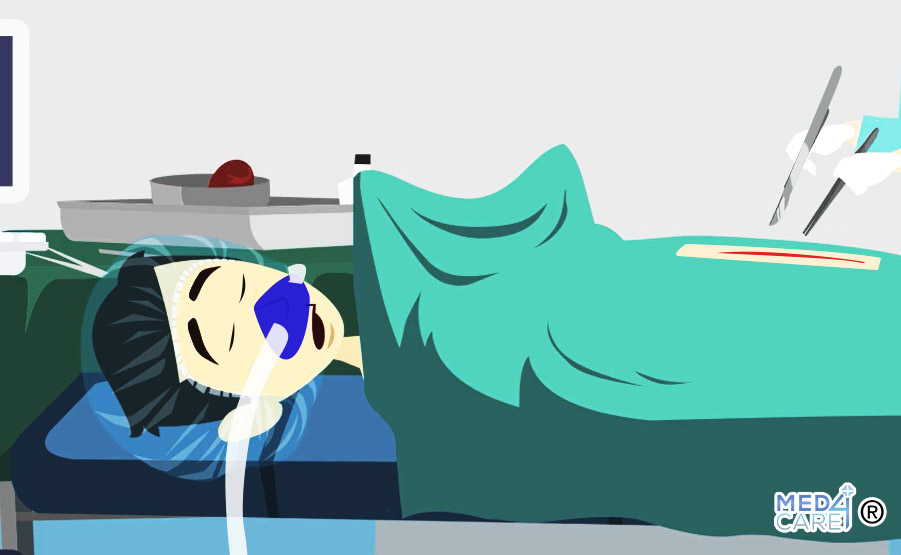

Conscious sedation relaxes you with sedative drugs while you stay conscious. Learn its uses in dentistry and minor surgery, techniques, recovery and risks.
Conscious sedation is a medical procedure, in the field of anesthesia, that keeps the patient in a state of relaxation and calm while preserving consciousness.
Let's find out more about what it is.
What is conscious sedation
In the field of anesthesiology, conscious sedation refers to the medical procedure that induces a state of general relaxation of the patient, using one or more sedative agents, which reduce the state of excitement or anxiety, [1] combined with drugs for analgesia.
Unlike general anesthesia, during which the patient completely loses consciousness, temporarily, conscious sedation works not by abolishing but by partially altering consciousness; the artificially induced state of depressed consciousness should not be understood as a clearly discrete event but rather, in accordance with the ADA (American Dental Association) guidelines, as a "continuum of depression of consciousness". [2]
The degree of sedation depends on individual susceptibility to drugs
This consideration accounts for each patient's individual sensitivity to the administration of sedative agents: each person responds differently to increasing doses of a drug. For this reason, since the patient's response to treatment is not always predictable, it must be recognized that an initial moderate conscious sedation could turn into a deep sedation. [3]
Differences between conscious sedation and deep sedation
In conscious sedation the ability to respond to verbal commands and touch stimuli remains almost unchanged, while in deep sedation the depression of consciousness is more marked, between deep sleep and coma, and active intervention may be required to keep the airway open.
Since conscious sedation promotes a state of general relaxation of the patient, in which active cooperation with the doctor or dentist can be established during the procedure, it is used in various types of minor surgery treatments and of invasive diagnostic or operative maneuvers.
Indications for conscious sedation
Conscious sedation, as mentioned, keeps the ability to respond to verbal stimuli unchanged and, at the same time, makes it possible to control patients' anxiety and excitement during slightly invasive procedures.
Conscious sedation in dentistry
For this reason, it is often used in dentistry, where the term "dental phobia" has even been coined to describe those particularly anxious patients who avoid dental treatment for the sole fear of experiencing negative and unpleasant sensations.
In dentistry, conscious sedation is indicated in the following cases:
- Anxiety and marked dental phobia;
- Prolonged dental procedures, such as placing a dental implant or removing a cavity followed by a filling;
- Presence of medical conditions worsened by stress, such as bronchial asthma and epilepsy;
- Children over one year of age, in whom intranasal midazolam has proven particularly effective;
- People with neurosis or psychosis. [4],[5]
Conscious sedation in minor surgery
Outside dentistry, conscious sedation is used for minor and minimally invasive surgery such as:
- Non-demolitive reconstructive cosmetic surgery operations, such as blepharoplasty or otoplasty;
- Minor orthopedic operations, such as the reduction of dislocations or of closed bone fractures;
- Tissue biopsies;
- Placement of electronic devices such as a cardiac pacemaker.
In all these cases anesthesia is generally local or topical, given by the surgeon.
Conscious sedation is also used successfully when endoscopic maneuvers are performed for exploratory or interventional purposes, for example during gastroscopy, bronchoscopy or colonoscopy. [6] Finally, conscious sedation can also be given during some diagnostic imaging tests (for example CT or MRI) that can be particularly unpleasant for claustrophobic or less cooperative people.
Conscious sedation combined with other anesthetic techniques
Sedation, light or deep, is often combined with other anesthetic techniques:
- with spinal anesthesia
- for epidural anesthesia
- with a peripheral nerve block (usually for the upper limbs)
In these cases sedation is used to increase the patient's comfort, or in pediatric cases where cooperation is poor.
Overview of the differences between conscious sedation, deep sedation and general anesthesia
| Conscious sedation | Deep sedation | General anesthesia | |
|---|---|---|---|
| Depression of consciousness | Minimal | Medium-high | Marked |
| Wakefulness | Awake: the patient is cooperative | The patient wakes up after repeated touch or painful stimulation | Unconscious: the patient does not wake up even after painful stimulation |
| Route of administration of sedative agents | Inhalation Intravenous Enteral | Inhalation or intravenous | Often intravenous |
| Total recovery time | Fast, within a few hours | Intermediate | Not very fast, possibly several hours |
| Spontaneous breathing | Adequate | Not always adequate: mechanical assistance may be needed | Not adequate: ventilation required |
| Cardiovascular function | Normal | Generally normal | Altered |
Preoperative assessment for conscious sedation
Consultation with the anesthesiologist for conscious sedation
The decision to give the patient conscious sedation rests primarily with the Anesthesiologist-Intensivist, but it can also be applied directly by the dentist or by the specialist doctor during endoscopic examinations.
If the presence of the anesthesiologist is requested for conscious sedation, an anesthesia consultation must be carried out, even a short one, during which the patient is properly informed and gives their consent to the procedure.
The consultation with the specialist before conscious sedation
Before conscious sedation is performed, the patient needs to have an in-depth interview with the doctor or dentist, in order to review the patient's clinical history and detect any possible contraindications to the procedure.
Generally, after collecting all the medical history data concerning the patient's overall health and the list of medications taken, some routine blood chemistry tests may be requested, possibly together with a chemical-physical and morphological urine test. The preoperative consultation then ends with the patient signing the informed consent form.
The blood tests often requested are:
- Complete blood count;
- Non-specific markers of inflammation: ESR and CRP;
- Liver function panel;
- Kidney function panel;
- Coagulation panel.
The physical examination and the medical history are two essential steps for the correct preoperative assessment of the patient who is about to receive conscious sedation, because these investigations may reveal any coagulation deficits or vital signs suggestive of disease, such as hypertension.
It is good practice for the patient to arrive for the procedure completely fasting for at least 7-8 hours (with the related restriction of liquids in the previous 3-4 hours), and accompanied by someone they know for the return home.
The drugs used for conscious sedation
The drugs used to obtain conscious sedation do not belong to a single category and can produce different effects in terms of analgesia, sedation and loco-regional anesthesia. It is therefore important to be able to predict the interactions that can arise when giving a combination of different drugs.
The classes of drugs most commonly used in conscious sedation are:
- Benzodiazepines
Benzodiazepines are psychoactive drugs with anxiolytic and sedative-hypnotic properties: the most commonly used are those with a short half-life and a fairly rapid onset of action.
The purpose of using benzodiazepines is to achieve, at low doses, light sedation, without leading to hypnosis or deep sedation. The drugs belonging to this category are midazolam, diazepam, triazolam and loprazolam. They can be given by mouth or intravenously, but also intranasally in children or in less cooperative patients.
- Sedative drugs
Sedative drugs have a final effect that depends on the dose given: since they can lead to temporary loss of consciousness, decisions on their use must necessarily be left to an Anesthesiologist-Intensivist.
Techniques for performing conscious sedation
Conscious sedation can be induced using various routes of administration, namely the enteral, intravenous or inhalation route.
Inhalation conscious sedation technique
This sedation technique produces a state of relaxation and calm, and a mixture of N2O/O2 (nitrous oxide/oxygen) is used.
Achieving conscious sedation by inhalation generally does not require close instrumental monitoring, and the maximum delivery of nitrous oxide N2O in the inhaled gas mixture must never exceed the threshold of 70 % of the total. For this reason it is not particularly powerful; however, in selected cases it can be effective.
Intravenous conscious sedation technique
The intravenous conscious sedation technique is the technique that offers the highest margins of safety and reliability for the success of the procedure, and generally involves giving a combination of drugs.
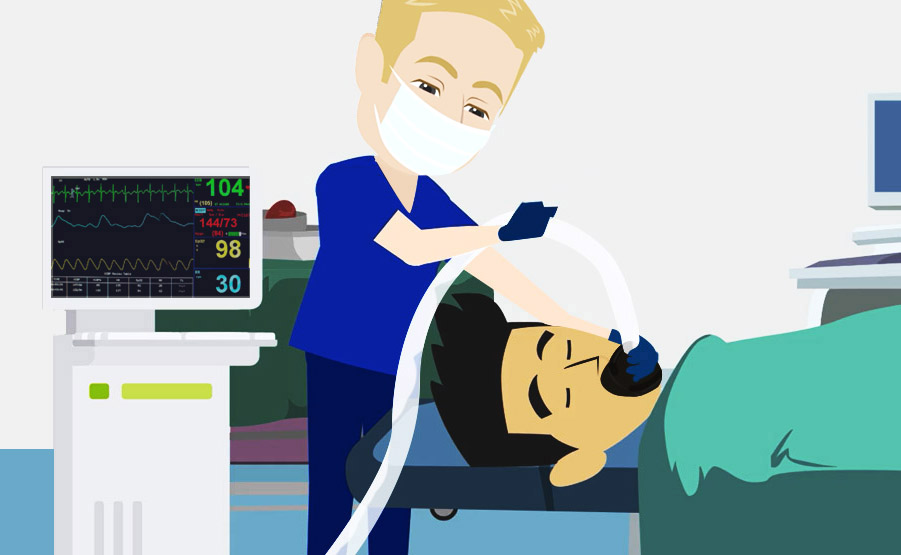
Before performing the procedure, it is necessary to carefully review the patient's clinical history and, if appropriate, request an anesthesia consultation and the presence of an anesthesiologist during the procedure. In all cases of intravenous conscious sedation, the presence of devices for instrumental monitoring of cardio-respiratory function and of a venous access for catheterization must always be ensured.
Enteral conscious sedation technique
The enteral conscious sedation technique is not widely used because it takes some time to become effective: it must be given in advance of the procedure. It is preferred to the other sedation techniques when the aim is to induce sedation after a certain interval of time, considering the time the gastrointestinal tract needs to absorb the drug.
In this technique a single drug is normally given at its maximum effective dose, and neither cardio-respiratory instrumental monitoring protocols nor venous catheterization access are required. [3]
Recovery from conscious sedation
Once the procedure is over, the patient must gradually recover consciousness from the partial alteration induced; in some cases a recovery room is specially set up right next to the operating room, while in other cases the patient recovers directly in the operating room.
It is the specific duty of the specialist doctor or of the "sedationist" dentist to wait for the patient's complete recovery, constantly monitoring their vital signs, including heart rate, blood pressure and respiratory rate.
The patient MUST be accompanied home by a family member or someone they know, because some side effects, such as drowsiness and slowed reflexes, can last for the whole day.
Risks and complications of conscious sedation
Precisely because conscious sedation, and sedation more generally, induces a depression of consciousness along a continuum, moderate sedation may progress to deep sedation; in these cases, it is advisable to promptly restore the patient's consciousness and, if difficulties are encountered, the help of a doctor specializing in Anesthesia and Intensive Care must be requested. It is also possible to use antidotes to the drugs used, such as flumazenil as an antidote to benzodiazepines.
The side effects that could appear after a conscious sedation procedure are:
- Temporary change in sensation, with paresthesia or hypoesthesia, usually related to the local anesthesia;
- Hypoxia/Hypercapnia, if breathing is reduced as a result of an excessive dose of sedatives;
- Muscle asthenia;
- Lowering of blood pressure due to the sedatives reducing overall sympathetic tone;
- Cardiac conduction disorders due to an overdose of sedative and/or anesthetic drugs;
- Visual hallucinations due to the side effects of the drugs used, particularly with ketamine.
Conclusions
Conscious sedation is a procedure with excellent safety margins that is widely used in anesthesia, in particular to reduce the patient's anxiety and restlessness.
Conscious sedation eases anxiety symptoms and can be induced using a combination of drugs, given enterally or parenterally. In dentistry or minor surgery it has become a procedure that is easy to perform and very satisfying for the patient and for healthcare staff.
Bibliography: sources and notes
- [1] Bready L, Dillman D, Noorily S, Peduto V. Anestesiologia. London: Elsevier Health Sciences Italy; 2011.
- [2] American Dental Association (ADA). Guidelines for the use of sedation and general anesthesia by dentists. ADA House of Delegates, 2016.
- [3] Associazione Italiana di Anestesia in Odontoiatria (AIAO). Raccomandazioni sulla Sedazione Cosciente in Odontoiatria – Tecniche e Modalità. 2018.
- [4] Kapur A, Kapur V. Conscious Sedation in Dentistry. Ann Maxillofac Surg. 2018
- [5] Kupietzky A, Houpt MI. Midazolam: a review of its use for conscious sedation of children. Pediatr Dent. 1993
- [6] Waring J, Baron T, Hirota W, Goldstein J, Jacobson B, Leighton J et al. Guidelines for Conscious Sedation and Monitoring During Gastrointestinal Endoscopy. Gastrointestinal Endoscopy. 2003;58(3):317-322.
Dr. Marco De Nardin
Medical Doctor, Specialist in Anesthesiology, Intensive Care and Pain Management
Dr. Marco De Nardin is a physician specializing in Anesthesiology, Intensive Care, and Pain Management. He completed his medical degree and specialty training in Italy, where he continues to practice at his private clinics in Mestre (Venice) and Milan. With extensive clinical experience spanning operating rooms, intensive care units, and pain management clinics, Dr. De Nardin brings a unique perspective that bridges acute-care medicine with chronic disease management. His clinical practice focuses on regional anesthesia, ozone therapy, intravenous infusion therapy, and integrative approaches to pain treatment. He is the founder of Med4Care, a medical information platform delivering evidence-based, physician-reviewed health content. Every article published under his name reflects his commitment to making complex medical topics accessible to patients without compromising scientific rigor.