

Depression: how to recognize it, what causes it and which treatments really work, from psychotherapy and medication to esketamine and brain stimulation.
Depression is not passing sadness or a weakness of character: it is an illness, common and treatable. In this article we look at how to recognize it, how widespread it is, what causes it and which treatments have been shown to work, from psychotherapy to medication and the most recent therapies.
If you are having thoughts of ending your life
If right now you are thinking of taking your own life or of harming yourself, do not stay alone.
In the United States:
- call 911 in a life-threatening situation, or go to the nearest emergency room;
- 988 Suicide & Crisis Lifeline: call or text 988, or chat online at 988lifeline.org: free, confidential, 24 hours a day, 7 days a week; veterans can call 988 and press 1.
In the United Kingdom:
- call 999 if your life or someone else's is at risk;
- NHS 111: call 111 and select the mental health option, or use 111 online, to be told where to get the right help;
- Samaritans: 116 123, free, day or night, 365 days a year.
Talking about it with your doctor or with someone you trust is the first step.
What is depression
We speak of major depression when, for at least two weeks, nearly every day, there is a depressed mood or a loss of interest and pleasure in things that used to be enjoyable, together with other symptoms that make everyday life difficult. What matters is not only how intense the sadness is, but how long it lasts and how much it weighs on work, relationships and self-care.
Depression tends to come back: people who have had one episode are at higher risk of having others. That is why treatment aims not only to end the episode but also to prevent relapses.
How common is it
According to the World Health Organization (WHO), depression affects about 5.2% of adults worldwide, more women (6.2%) than men (4.1%): about 322 million people. In Italy, data from the PASSI surveillance system of the Istituto Superiore di Sanità (the Italian National Institute of Health) for 2023-2024 show that just over 6% of adults aged 18 to 69 report depressive symptoms; only 65% of them turn to someone for help.
What causes it
Depression does not have a single cause: it arises from a combination of several factors:
- biological: family history, changes in the functioning of certain brain networks and of the systems that regulate stress;
- psychological: a tendency towards pessimism, low self-esteem, difficult experiences in childhood;
- environmental: bereavement, separation, job loss, isolation, poverty, violence;
- medical: some illnesses, such as hypothyroidism, chronic diseases and chronic pain, and some medicines can cause or worsen depressive symptoms.
Symptoms
The most common symptoms are:
- sadness, emptiness or irritability for most of the day;
- loss of interest and pleasure;
- tiredness and lack of energy;
- sleep problems, sleeping too little or too much;
- changes in appetite and weight;
- difficulty concentrating and remembering;
- feelings of guilt or worthlessness;
- slowing down or agitation;
- thoughts of death or suicide.
In older people, depression may show up mainly as physical complaints, memory loss or withdrawal, and for this reason it is recognized later.
How it is diagnosed
The diagnosis is clinical: it is based on an interview with a doctor or psychiatrist, who reconstructs the symptoms, how long they have lasted and the person's history. Questionnaires such as the Beck Depression Inventory help to measure severity and to follow its course over time (the Italian edition of Med4Care offers it as an online depression test), but they do not replace a medical visit. Blood tests, for example thyroid tests, are used to rule out medical causes that can mimic or worsen depression.
An important point is to distinguish depression from the depression that occurs in bipolar disorder, because the treatments are different.
Treatment
Psychotherapy
Psychotherapy is as effective a treatment as medication. A large meta-analysis of 331 randomized trials and more than 34,000 patients showed that all the main types of psychotherapy, such as cognitive behavioral therapy, interpersonal therapy, behavioral activation and problem-solving therapy, work better than usual care, with minimal differences between them. For this reason, the choice depends mainly on the person's preferences and on availability.
Another meta-analysis of 101 studies showed that psychotherapy and medication on their own have similar efficacy, while combining the two works better than either one alone, especially in moderate or severe depression.
Antidepressant medicines
Antidepressants are divided into classes:
- selective serotonin reuptake inhibitors (SSRIs), usually the first choice because they are well tolerated;
- serotonin and norepinephrine reuptake inhibitors (SNRIs);
- tricyclic antidepressants, the oldest, effective but with more side effects;
- monoamine oxidase inhibitors (MAOIs), which block the enzyme that breaks down serotonin, norepinephrine and dopamine, now rarely used because of their interactions with other medicines and with some foods;
- other antidepressants with different mechanisms, such as bupropion, mirtazapine, trazodone, vortioxetine and agomelatine.
The largest meta-analysis available, of 522 trials and more than 116,000 patients, confirmed that all 21 antidepressants studied work better than placebo in major depression, with modest differences between them. The right medicine is therefore chosen on the basis of side effects, other illnesses and the person's preferences. The effect usually appears after a few weeks, and treatment should never be stopped suddenly or without talking to your doctor.
Esketamine nasal spray
For depression that does not respond to at least two different antidepressants, known as treatment-resistant depression, there is esketamine, a nasal spray. In the United States, the Food and Drug Administration (FDA) approved it in 2019 for treatment-resistant depression in adults, in conjunction with an oral antidepressant; since January 2025 the FDA-approved prescribing information also allows it to be used on its own (as monotherapy). In a randomized trial of 676 patients with treatment-resistant depression, remission after 8 weeks was more frequent with esketamine than with add-on quetiapine (27.1% versus 17.6%). In the United States it is available only through a restricted program, the SPRAVATO REMS (Risk Evaluation and Mitigation Strategy): it is dispensed and administered only in certified healthcare settings, the patient takes it under the direct observation of a healthcare provider and is monitored for at least 2 hours afterwards, because it can cause sedation, dizziness and a feeling of detachment (dissociation). The Italian edition of Med4Care also has a dedicated article on esketamine.
Transcranial magnetic stimulation
Repetitive transcranial magnetic stimulation (rTMS) uses magnetic pulses, generated by a coil placed on the head, to stimulate the brain areas involved in regulating mood. It is done as an outpatient procedure, without anesthesia, with repeated sessions over several weeks. A meta-analysis published in 2026, of 141 studies and more than 10,000 patients, confirmed that several types of stimulation work better than sham stimulation, including in treatment-resistant depression, although the effects are moderate.
Transcranial direct current stimulation
Transcranial direct current stimulation (tDCS) passes a very weak current between two electrodes on the forehead, and it can also be used at home with remote supervision by a center. The evidence is weaker: a 2025 meta-analysis found no significant benefit in major depression when tDCS is used on its own, but did find one when it is combined with antidepressant medication. A 2026 study that paired it with a cognitive video game gave no better results than sham treatment: we describe it in our article on transcranial stimulation with a video game.
Electroconvulsive therapy
In the most severe forms, when the risk is high or other treatments have not worked, electroconvulsive therapy, performed under general anesthesia, may be used. A comparison between ketamine and electroconvulsive therapy is available in the Italian edition of Med4Care.
St. John's wort
Hypericum and St. John's wort are two names for the same plant, Hypericum perforatum. It is available without a prescription, but it should not be taken lightly: according to the US National Center for Complementary and Integrative Health (NCCIH), part of the National Institutes of Health (page updated May 2025), it can weaken the effects of many medicines, including crucially important ones such as warfarin (an anticoagulant), cyclosporine (which prevents the body from rejecting transplanted organs), some HIV drugs, some cancer medicines and birth control pills. Taken with certain antidepressants or other drugs that affect serotonin, it may lead to increased serotonin-related side effects, which can be serious. For this reason it should only be used after talking to your doctor, and never together with antidepressants.
Lifestyle
Regular physical activity, sleep that is as regular as possible, cutting down on alcohol and keeping up social contacts help recovery, but they do not replace treatment in moderate or severe depression. Diet also plays a role, which is still being studied.
When to see a doctor
In my experience as a doctor, the hardest thing for many patients is taking the first step: they often come after months, convinced they had to “manage on their own”. It is worth seeing your family doctor or a psychiatrist when symptoms have lasted more than two weeks, when they make it hard to work or to look after yourself and others, and immediately if thoughts of death appear.
References
- World Health Organization. Depressive disorder (depression). Fact sheet, 11 September 2026. Accessed 21 October 2026. who.int
- Istituto Superiore di Sanità. Salute mentale: sintomi di depressione per il 6% degli adulti e il 9% degli over 65, cresce la domanda di cura (PASSI data 2023-2024; in Italian), 9 October 2025. Accessed 21 October 2026. iss.it
- Cuijpers P, Quero S, Noma H, Ciharova M, Miguel C, Karyotaki E, Cipriani A, et al. Psychotherapies for depression: a network meta-analysis covering efficacy, acceptability and long-term outcomes of all main treatment types. World Psychiatry. 2021;20(2):283-293. doi:10.1002/wps.20860. PubMed
- Cuijpers P, Noma H, Karyotaki E, Vinkers CH, Cipriani A, Furukawa TA. A network meta-analysis of the effects of psychotherapies, pharmacotherapies and their combination in the treatment of adult depression. World Psychiatry. 2020;19(1):92-107. doi:10.1002/wps.20701. PubMed
- Cipriani A, Furukawa TA, Salanti G, Chaimani A, Atkinson LZ, Ogawa Y, Leucht S, et al. Comparative efficacy and acceptability of 21 antidepressant drugs for the acute treatment of adults with major depressive disorder: a systematic review and network meta-analysis. The Lancet. 2018;391(10128):1357-1366. doi:10.1016/S0140-6736(17)32802-7. PubMed
- Reif A, Bitter I, Buyze J, Cebulla K, Frey R, Fu DJ, Ito T, et al. Esketamine Nasal Spray versus Quetiapine for Treatment-Resistant Depression. The New England Journal of Medicine. 2023;389(14):1298-1309. doi:10.1056/NEJMoa2304145. PubMed
- U.S. Food and Drug Administration. SPRAVATO (esketamine) nasal spray: full prescribing information, sections 1 (Indications and Usage) and 5.5 (SPRAVATO REMS), revised 04/2025. Accessed 21 October 2026. accessdata.fda.gov
- U.S. Food and Drug Administration. SPRAVATO (esketamine) Medication Guide, revised 09/2026. Accessed 21 October 2026. accessdata.fda.gov
- U.S. Food and Drug Administration. NDA 211243/S-027, supplement approval letter for the Spravato REMS (REMS originally approved on March 5, 2019), 23 January 2026. Accessed 21 October 2026. accessdata.fda.gov
- Zhang Y, Meng J, Liu X, Tang H, Zhong D, Li Y, Li J, et al. Repetitive Transcranial Magnetic Stimulation for Major Depressive Disorder: A Systematic Review and Network Meta-Analysis. Journal of Evidence-Based Medicine. 2026;19(3):e70155. doi:10.1111/jebm.70155. PubMed
- Ren C, Pagali SR, Wang Z, Kung S, Boyapati RB, Islam K, Li JW, et al. Transcranial Electrical Stimulation in Treatment of Depression: A Systematic Review and Meta-Analysis. JAMA Network Open. 2025;8(6):e2516459. doi:10.1001/jamanetworkopen.2025.16459. PubMed
- National Center for Complementary and Integrative Health (NCCIH), National Institutes of Health. St. John's Wort, last updated May 2025. Accessed 21 October 2026. nccih.nih.gov
- National Institute of Mental Health (NIMH), National Institutes of Health. Help for Mental Illnesses, last reviewed April 2026. Accessed 21 October 2026. nimh.nih.gov
- 988 Suicide & Crisis Lifeline. Get Help. Accessed 21 October 2026. 988lifeline.org
- NHS. Where to get urgent help for mental health, page last reviewed 26 April 2023. Accessed 21 October 2026. nhs.uk
- Samaritans. Contact us. Accessed 21 October 2026. samaritans.org
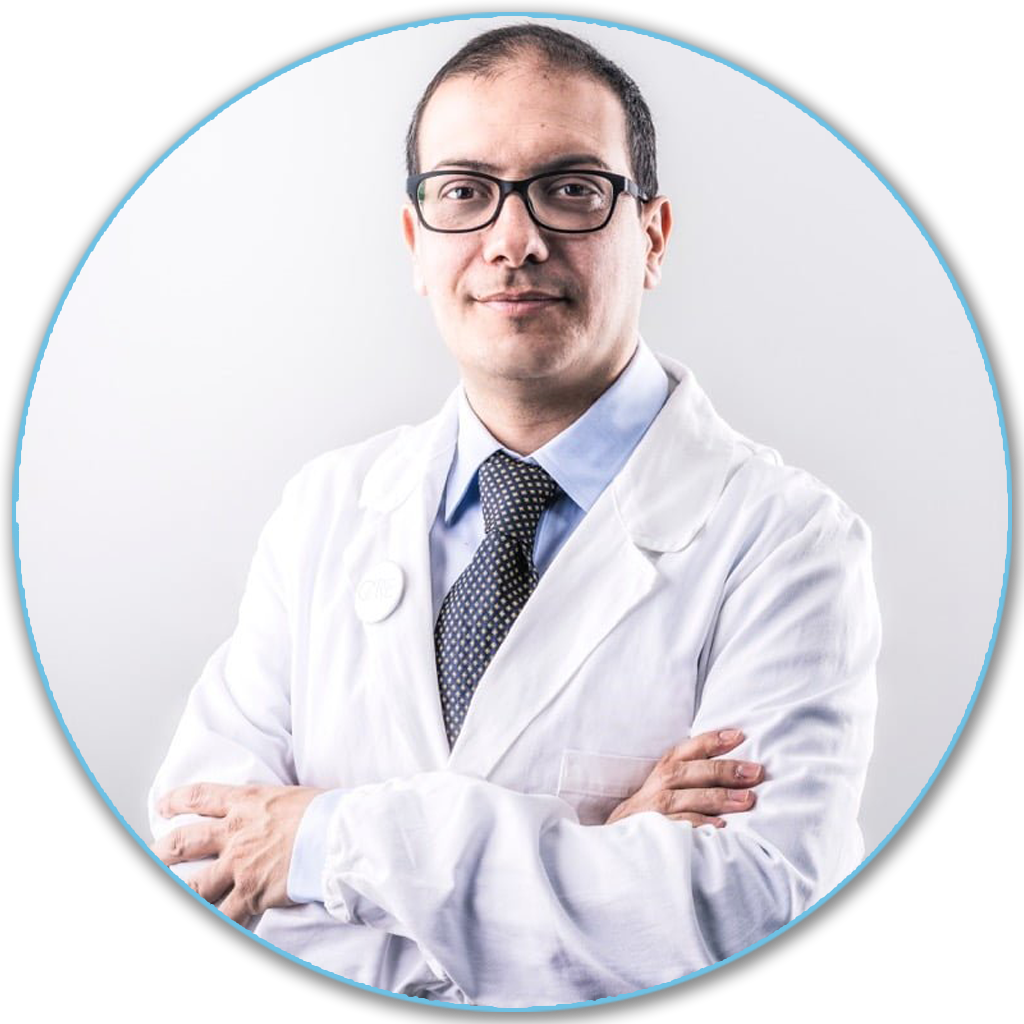
Dr. Marco De Nardin
Medical Doctor, Specialist in Anesthesiology, Intensive Care and Pain Management
Dr. Marco De Nardin is a physician specializing in Anesthesiology, Intensive Care, and Pain Management. He completed his medical degree and specialty training in Italy, where he continues to practice at his private clinics in Mestre (Venice) and Milan. With extensive clinical experience spanning operating rooms, intensive care units, and pain management clinics, Dr. De Nardin brings a unique perspective that bridges acute-care medicine with chronic disease management. His clinical practice focuses on regional anesthesia, ozone therapy, intravenous infusion therapy, and integrative approaches to pain treatment. He is the founder of Med4Care, a medical information platform delivering evidence-based, physician-reviewed health content. Every article published under his name reflects his commitment to making complex medical topics accessible to patients without compromising scientific rigor.


