
The medical history is the structured interview that opens the diagnostic process. A doctor explains how it works and why it guides most diagnoses before any test.
The medical history is the beginning of a journey that leads to the diagnosis of a disease, together with the physical examination and diagnostic tests.
What is a medical history?
The term anamnesis comes from the Greek ἀνάμνησις, composed of anà (again) and mnesis (memory): literally, the calling back to mind. Plato used this word to describe knowledge as the recovery of what the soul had already encountered. In medicine, the concept translates into something very concrete: the medical history is the structured interview through which the physician reconstructs the patient's clinical story before examining them, before touching an arm, before prescribing any test.
It is the first act of the diagnostic process — and often the most decisive. My semiotics mentors at the University of Padua, Prof. Girolami and Prof. Federspil, used to repeat that the history is worth 50% of the diagnosis. As a student, it seemed like an exaggeration to me. Today, after years of clinical practice, I have to admit they were right — and some modern estimates put that figure between 70 and 80%.

The reason is simple: symptoms have a context, and the context is the patient as a whole. Chest pain in a fifty-year-old smoker with a family history of heart attack carries a different weight than the same pain in a twenty-year-old female athlete after exertion. Objective data come afterwards; the narrative comes first.
The purpose of the medical history
The aim of the medical history is to gather all the information about the patient that may prove useful in building an overall picture of the individual and of their current problem, so that a series of diagnostic hypotheses can already be worked out, to be checked afterwards with confirmatory tests — objective, radiological, or laboratory-based.
How the medical history is taken
The "classic" medical history takes place as a personal conversation between physician and patient. It lasts for as long as it takes to obtain the information, in a quiet and private place, so as to put the patient in the best possible condition to express themselves as well as they can.

The history ranges, with its questions, across every aspect of the individual's life. For convenience, we divide it into the traditional areas: family history, physiological history, and past and present medical history.
Family history
In the family history, or familial anamnesis, the state of health or the diseases that have affected the other members of the individual's blood family are considered.

Generally, attention is paid to the causes that led to the death of other family members, or to any hereditary diseases, in order to understand whether there are situations in the family that might explain certain symptoms of the patient.
One example is a family history of cardiovascular disease, which helps us assess the risk of the person being examined also having a cardiovascular problem, now or in the future. Sometimes the family history alone is enough to make a diagnosis of disease, since many diseases are genetically transmitted (that is, they depend on transmission from parents to children). An accurate collection of information can steer the diagnostic suspicion in a precise direction, to be confirmed with tests.
The patient's general history
The physiological history includes all the information concerning the patient's habits. The place of residence, lifestyle, type of work, general habits, recurring behaviors. Smoking or heavy exposure to smoke, pollution, diet, sleep quality, and bowel regularity are also important. Everything is useful for uncovering, within the patient's life and habits, elements connected to their current state of health.

A classic example in this case is the patient who presents with fever and altered liver function. The experienced clinician, by asking about lifestyle or travel, can identify risky behaviors (for example, working as a fisherman) that suggest a Leptospira infection. Retrieving this information can become crucial for choosing the most appropriate treatment while waiting for other tests to become available.
The history of illnesses, past and present
The past medical history investigates all of the subject's previous illnesses (including hospital admissions and surgical operations), and any problems that arose at birth or in the more delicate periods of life (childbirth, breastfeeding, teething, puberty in the case of children).

The importance of communication and dialogue in the medical history
From what we have explained so far, it is clear that obtaining the best possible history takes time, energy, dialogue, and mutual interest. It is essential to build a good level of collaboration between physician and patient. In particular, the person needs to feel at ease, in a suitable environment, so as to be as thorough as possible in telling the physician even those details — always connected to the symptoms they are experiencing — that they would have considered useless. This is because the more precise the information reported, the higher the chances of an accurate diagnosis. A good dialogue proves fruitful for both, since the shared interest of those involved is to reach the best diagnosis and therefore the best treatment for the patient's health.

The physician's analysis, during the conversation, must be critical: it does not stop at a simple listing of the symptoms and facts reported by the patient, but requires a reworking and an attentiveness that can see beyond mere appearances.
More generally, regarding the current problem, the typical questions asked can be summed up with 4 of the so-called "5 Ws":
- What: "what" the patient feels, what kind of discomfort;
- Where: "where" the discomfort is located, in which part of the body if it can be specified;
- When: "when" the problem started, in chronological terms;
- How: "how" the discomfort presented, whether following some movement or event.
From the medical history to the diagnosis
The information gathered during the medical history is not simply recorded: it is processed in real time. The physician builds a progressive line of clinical reasoning: each of the patient's answers narrows or widens the field of hypotheses. This process — from the history to the diagnostic suspicion, then to the physical examination, then to diagnostic tests — is the backbone of the clinical method.

The history produces a list of candidate diagnostic hypotheses: the differential diagnosis. Each subsequent step serves to rule some of them out and reinforce the others. Without an accurate history, tests risk being chosen at random — expensive, sometimes useless, sometimes even misleading.
The complete diagnostic cluster — history, semiotics, physical examination — then leads to the formulation of a prognosis and, where indicated, a strategy of prophylaxis.
The medical history in special situations
History taking in an emergency
When time is critical, the history is condensed. In the emergency department and in intensive care the acronym AMPLE is used:

A — Allergies: known allergies, in particular to drugs and contrast media.
M — Medications: current drugs.
P — Past medical history: relevant previous conditions.
L — Last meal: the last meal (essential for anesthetic management and assessing the risk of aspiration).
E — Events: what happened in the hours before admission.
In intensive care, when the patient arrives intubated and unconscious, the history becomes detective work: you have to call the treating physician, consult the electronic health record, ask the family members present, look for a medical bracelet. Every fragment of information retrieved is a piece of the puzzle that can guide diagnosis and treatment in the most critical hours.
Pediatric history taking
In a young child, the protagonist of the history is the parent. The questions shift to psychomotor development, weight trends, vaccinations given, feeding, behaviors, and recent changes. In an older child it is important to involve the patient directly, even in the presence of the parent: children notice things that parents do not report.

History taking in older adults
In older patients, the history becomes more complicated for three main reasons: polypharmacy (often 5-10 drugs, with interactions that are hard to reconstruct without a written list), possible cognitive decline that can affect the reliability of the account, and reduced perception of symptoms — older patients often report less pain than younger adults, even when facing serious acute conditions. Involving the caregiver is not optional: it is often indispensable.

Common mistakes and tips for the patient
The quality of the history also depends on the patient. Here are the behaviors that make a visit more effective:
Bring a written list of your medications. Drug brand names are hard to remember and easy to confuse. A sheet with the name, dose, and frequency is worth more than five minutes of reconstruction from memory.
Don't leave out information because of embarrassment. Alcohol consumption, sexual habits, substance use, and psychological problems are all medically relevant information. The physician does not judge: they use those data to build the most accurate diagnosis possible.
Report allergies even if you are "not sure." If a reaction appeared in the past after a drug — even a mild one, even without a confirmed diagnosis — it should be reported. A doubt can be managed; an unreported allergy can become an emergency.
Describe symptoms, not the diagnosis. "I have burning behind my breastbone after meals that gets worse when I lie down" is more useful than "I have reflux." The diagnosis is made by the physician; describing the symptom is up to the patient.
Frequently asked questions (FAQ)
How long does a medical history take?
It depends on the context. A general practice visit may take 10-15 minutes; a thorough first specialist visit even 30-40 minutes; an emergency history can be concentrated into 2-3 minutes with the AMPLE protocol. Duration is not an indicator of quality: an experienced physician gathers the information that matters in a few minutes, steering the questions according to the reported symptoms.
Should I tell the doctor everything, even embarrassing things?
Yes, and without fear. Medical confidentiality is an ethical and legal obligation. Information about lifestyle, habits, sexuality, or substance use is not shared without consent, and it is often clinically decisive. The embarrassment at the time of the visit is temporary; a missed diagnosis due to incomplete information can have lasting consequences.
Does the medical history replace tests?
No: the history does not replace tests, it guides them. An accurate history makes it possible to choose the right tests, avoiding useless ones and reducing time and cost. It is the filter that turns a generic list of investigations into a targeted diagnostic path.
Can I prepare before the visit?
Absolutely. Bringing a written list of your medications with doses, a record of past illnesses and surgical operations, and a short note on your symptoms (when they appeared, how they evolved, what makes them worse) turns the visit into a more efficient and productive interaction for both sides.
Sources:
- Bates. Esame obiettivo e Anamnesi by Lynn S. Bickley, edited by N. Montano;
- Guida professionale di anatomia e fisiologia. Anamnesi by C. Marchegiani.
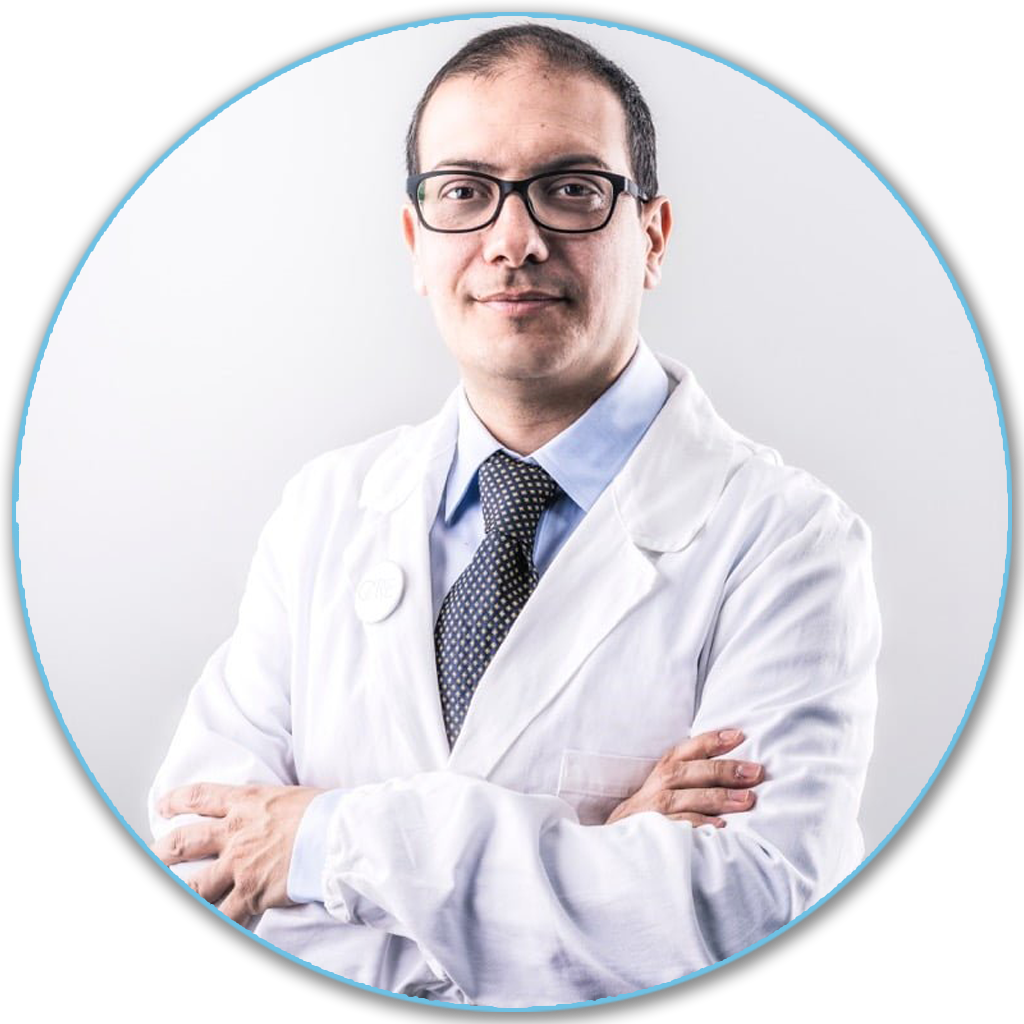
Dr. Marco De Nardin
Medical Doctor, Specialist in Anesthesiology, Intensive Care and Pain Management
Dr. Marco De Nardin is a physician specializing in Anesthesiology, Intensive Care, and Pain Management. He completed his medical degree and specialty training in Italy, where he continues to practice at his private clinics in Mestre (Venice) and Milan. With extensive clinical experience spanning operating rooms, intensive care units, and pain management clinics, Dr. De Nardin brings a unique perspective that bridges acute-care medicine with chronic disease management. His clinical practice focuses on regional anesthesia, ozone therapy, intravenous infusion therapy, and integrative approaches to pain treatment. He is the founder of Med4Care, a medical information platform delivering evidence-based, physician-reviewed health content. Every article published under his name reflects his commitment to making complex medical topics accessible to patients without compromising scientific rigor.


