Acute cystitis: why it mainly affects women, causes, symptoms, urine tests, complicated vs uncomplicated forms, antibiotic options and prevention.
Acute cystitis is an acute inflammation of the bladder; this inflammation is usually caused by bacteria, but not always. When the bladder inflammation is driven by bacteria, it is called a “urinary tract infection.” A urinary tract infection is a form of inflammation of the upper or lower urinary tract produced by pathogens. More precisely, the inflammation affects the tissue lining the inside of the urinary tract, which is called the urothelium. (1)
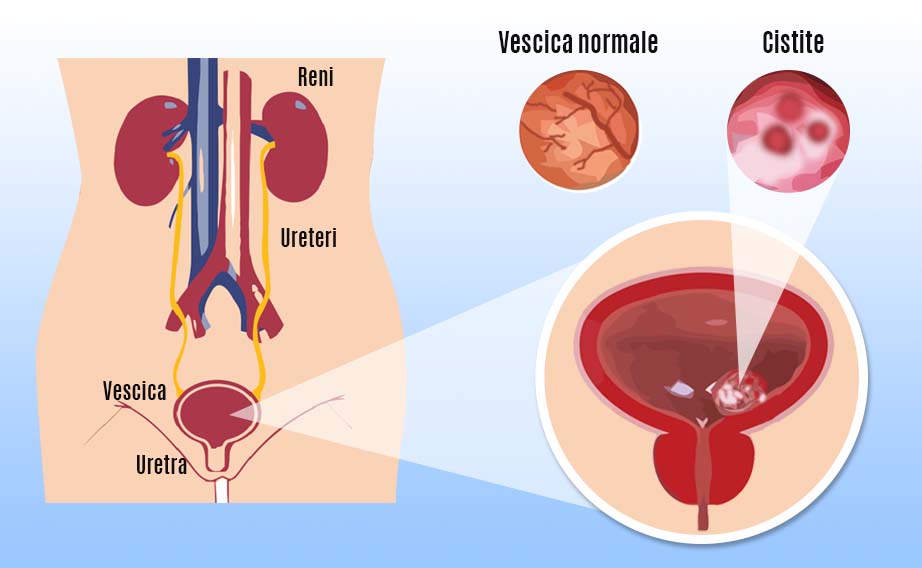
The bacteria responsible for urinary tract infection are the bacteria found in the last part of the intestine. They can reach the bladder from the outside, but also from the inside, “seeping” through the walls of the organs.
Acute cystitis refers to a single episode. If neglected, or treated without checking the various possible causes, it can come back several times, becoming recurrent and finally “chronic cystitis.”
How common is acute cystitis? Epidemiology
Found all over the world, cystitis mainly affects women, up to 10 times more than men, because the female urethra, being shorter than the male urethra, makes it easier for bacteria to pass through; they can travel up toward the bladder and, in some cases, reach the ureters and kidneys (pyelonephritis).
It is estimated that up to 40% of women have an attack of acute cystitis during their lifetime. This is a very high percentage; cystitis is so common that it is second only to respiratory inflammations.
Within one year of the infection, 27% to 46% of women have a new episode of cystitis. The percentage of men affected by acute cystitis is about 10%; it is more frequent in older age and often associated with bacterial prostatitis.
What are the causes of cystitis? Etiology
Bacterial cystitis
Most bladder inflammations are infections driven by bacteria. In the vast majority of cases (86%), urinary tract infections in women are due to a bacterium called Escherichia coli.
Other bacteria responsible for urinary infections are:
- Staphylococcus saprophyticus (4%),
- Klebsiella (3%),
- Proteus (3%),
- Enterobacter (1.4%),
- Citrobacter (0.8%)
- Enterococcus (0.5%).
Non-bacterial cystitis
There is also a form of bladder inflammation that is not driven by the presence of fecal bacteria: in this case we speak of abacterial cystitis. Here the urine is sterile, and no bacteria are present.
The causes of non-bacterial cystitis can generally be traced back to an irritation, often chemical in nature. For example, it can be linked to repeated consumption of irritating foods, to high urine acidity (which changes the pH, with a resulting change in the bacterial flora), or to interstitial cystitis.
Constipation, especially in women, can also cause cystitis, as can the habit of wearing synthetic or overly tight clothing.
How does cystitis develop? Pathophysiology
The infection, and therefore the cystitis, results (in bacterial cystitis) from bacterial invasion of the bladder urothelium by bacteria that migrate from the rectum or by bacteria colonizing the perineum and vagina.
The walls of the urinary tract become inflamed, causing pain and burning on urination. Sometimes there is blood in the urine.
Cystitis: symptoms and diagnosis
Symptoms of acute cystitis. Medical history
The main symptoms of acute cystitis are:
- Rushing to the bathroom with the feeling that the bladder is too full,
- difficulty urinating, associated with
- pain and severe burning during urination
Other characteristic symptoms are:
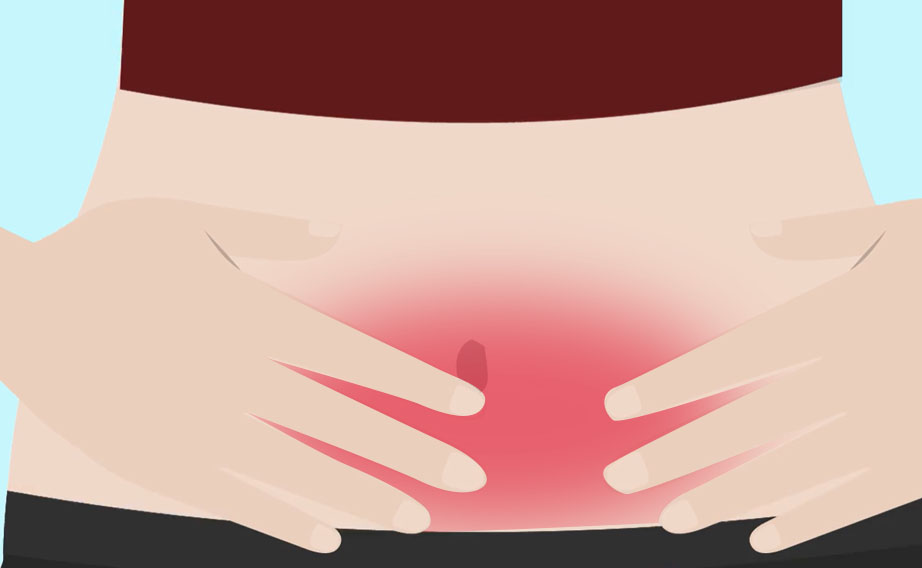
- pain and a feeling of heaviness in the lower abdomen,
- painful muscle spasms (bladder tenesmus),
- an urge to urinate at ever shorter intervals (even every fifteen minutes), or pollakiuria.
The urine is often cloudy and foul-smelling, and sometimes blood is present (hematuria).
Fever, headache and nausea are less common, but possible, especially if the infection is significant.
In some cases there are no symptoms at all, only bacteria in the urine.
Signs of acute cystitis. Physical examination
The physical examination during uncomplicated acute cystitis is generally normal. In most cases, purulent discharge or pyuria (presence of pus in the urine) may be noted.
If the patient appears to be in a lot of distress, with fever, tachycardia and flank pain, it could be pyelonephritis, which in some cases develops as a consequence of cystitis that was neglected or not properly treated. In this situation, any kidney inflammation will be checked with the Giordano maneuver.
Instrumental tests for the diagnosis of cystitis
To confirm or rule out the presence of the disease, some laboratory tests are needed:
- Chemical-physical and microscopic urinalysis
- Urine culture (a test useful for checking for bacteria in the urine)
- Antibiogram (needed when bacteria are found, to determine their type and their sensitivity to antibiotics)
Prognosis of cystitis
Cystitis can be complicated or uncomplicated. Treatment depends on the category the patient falls into.
Cystitis is uncomplicated when there are no anatomical or functional abnormalities.
Cystitis is complicated when there are anatomical or systemic factors that increase the severity of the infection. These include:
- male sex,
- diabetes,
- immunosuppression,
- polycystic kidney,
- infection acquired in the hospital,
- bladder outlet obstruction (prostatic hypertrophy, urethral stricture),
- neurogenic bladder (multiple sclerosis, diabetes mellitus),
- catheterization or ureteral stent,
- ureterolithiasis,
- genitourinary surgery
- neoplasia,
- vesicoureteral reflux.
The diagnosis of uncomplicated acute cystitis should be supported by a focused examination and a urinalysis. It is also important to rule out a more serious urinary tract infection (UTI) such as pyelonephritis.
Treatment for cystitis
When treating acute cystitis, the choice of treatment must be individualized and depends on the duration and type of infection.
The choice of an antibiotic depends on its effectiveness, the risk of adverse effects, resistance rates and its propensity to cause collateral damage.
Before taking an antibiotic it would be advisable to have an antibiogram done, to assess its effectiveness in the specific case, and in any event the decision to take an antibiotic should be made together with your family doctor.
Uncomplicated acute cystitis
- Nitrofurantoin 100 mg by mouth twice a day for 5 days
- Trimethoprim-sulfamethoxazole 160 mg / 800 mg twice a day for 3 days
- Ciprofloxacin 250 mg twice a day or levofloxacin 250 mg once a day for 3 days
- Beta-lactams such as amoxicillin-clavulanate 500/125 mg twice a day for seven days
Complicated acute cystitis
There is no absolute guideline for treatment, which generally requires a longer duration (about seven days). The recommended treatments are listed below.
Complicated cystitis in non-pregnant women
- Ciprofloxacin 500 mg by mouth twice a day for 7 to 10 days
- Nitrofurantoin monohydrate / microcrystals 100 mg by mouth twice a day for 7 days
Complicated cystitis in pregnant women
A shorter course of antibiotic therapy is preferable in pregnant patients. Fluoroquinolones are contraindicated during pregnancy. Nitrofurantoin is contraindicated in a pregnant patient at term, during labor and delivery.
- A beta-lactam, such as amoxicillin-clavulanate 500 mg / 125 mg by mouth twice a day for 7 days
- A cephalosporin, such as cephalexin 500 mg by mouth four times a day for 3-5 days
Complicated cystitis in men
Acute cystitis in men should always be considered complicated because it is generally quite rare. Men with cystitis who show no signs or symptoms of prostatitis can generally be treated with a fluoroquinolone, such as ciprofloxacin (500 mg by mouth twice a day for 7 days) or levofloxacin (750 mg by mouth once a day for 7 days).
Differential diagnosis of cystitis
The differential diagnosis of acute cystitis includes other diseases, including:
- Syphilis
- Urethritis
In men, the differential diagnosis of acute cystitis must also consider:
- Epididymitis
- Prostatitis
In women, the differential diagnosis of acute cystitis must also consider:
- Cervicitis
- Vulvovaginitis
How to prevent cystitis
Urinary infections, and cystitis in particular, are very common. For this reason prevention is very important. As we saw in the etiology section, in most cases acute cystitis is caused by bacteria coming from the anus. This is why personal hygiene is essential to prevent the translocation of bacteria from the back region to the front, with colonization of the urethra.
References
- Bollestad M, Vik I, Grude N, Lindbæk M. Predictors of Symptom Duration and Bacteriuria in Uncomplicated Urinary Tract Infection. Scand J Prim Health Care.
- Nace DA, Perera SK, Hanlon JT, Saracco S, Anderson G, Schweon SJ, Klein-Fedyshin M, Wessel CB, Mulligan M, Drinka PJ, Crnich CJ. The Improving Outcomes of UTI Management in Long-Term Care Project (IOU) Consensus Guidelines for the Diagnosis of Uncomplicated Cystitis in Nursing Home Residents.
- May M, Schostak M, Lebentrau S., MR2- study group. Guidelines for patients with acute uncomplicated cystitis may not be a paper tiger: a call for its implementation in clinical routine.
- Kranz J, Schmidt S, Lebert C, Schneidewind L, Mandraka F, Kunze M, Helbig S, Vahlensieck W, Naber K, Schmiemann G, Wagenlehner FM. The 2017 Update of the German Clinical Guideline on Epidemiology, Diagnostics, Therapy, Prevention, and Management of Uncomplicated Urinary Tract Infections in Adult Patients. Part II: Therapy and Prevention.

Dr. Marco De Nardin
Medical Doctor, Specialist in Anesthesiology, Intensive Care and Pain Management
Dr. Marco De Nardin is a physician specializing in Anesthesiology, Intensive Care, and Pain Management. He completed his medical degree and specialty training in Italy, where he continues to practice at his private clinics in Mestre (Venice) and Milan. With extensive clinical experience spanning operating rooms, intensive care units, and pain management clinics, Dr. De Nardin brings a unique perspective that bridges acute-care medicine with chronic disease management. His clinical practice focuses on regional anesthesia, ozone therapy, intravenous infusion therapy, and integrative approaches to pain treatment. He is the founder of Med4Care, a medical information platform delivering evidence-based, physician-reviewed health content. Every article published under his name reflects his commitment to making complex medical topics accessible to patients without compromising scientific rigor.